Information about Exam 1

This post contains specifics and logistics for our first exam in General Histology (DDS 6214).

Start and end time

The exam is scheduled for Thursday, August 28, and you may take it any time between 12:01 am and 11:59 pm that day. Once you open the exam you have two hours to complete the exam. All submissions must be uploaded by 11:59 pm on Thursday in order to receive a grade.

Accommodations

If you have accommodations for exams, please send me a quick email reminder (if you haven’t already) just so I’m sure I have a complete and accurate list.

Password

The password for the exam is statefair2025.

Classroom availability

Our classroom will be open and available from 1:00 – 3:00 pm on Thursday, if you want to take the exam at that time in our classroom. I’d suggest that if there are several people in the the room, please try to space yourself out well so there’s no way anyone can suggest the possibility of you looking at someone else’s computer 🙂  You can, of course, take the exam anywhere you want – so take it wherever you’re most comfortable.

Content

I aim for roughly 5 questions per lecture hour on our exams (in this class and in our future classes). For this exam, the Intro to Histology lecture was quite short, so I only have two questions on that lecture. Here’s the full breakdown by lecture:

Intro to Histology: 2 questions
Embryology: 5 questions
Epithelial Tissue: 10 questions
Muscle Tissue: 10 questions
Nervous Tissue: 5 questions
Connective Tissue: 6 questions
Cartilage and Bone: 9 questions

All questions are multiple choice with one correct answer, and each question is worth one point.

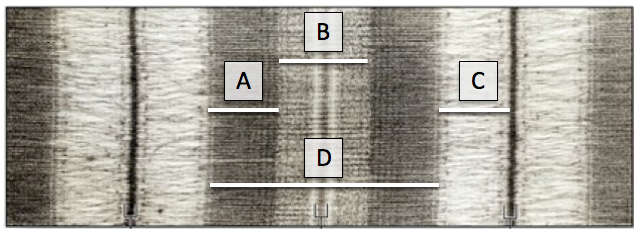
Please take a look at the Sample Exam Questions post to get an idea of how I write questions. There will not be any tissue microscopic images on the exam, but as I mentioned in class, there will be an electron micrograph image of the sarcomere on the exam. Questions 16 and 17 in the Exam 1 Review Kahoot, and question 4 in the Sample Exam Questions post show this image and give you an idea of the kinds of questions I might ask on the exam.

Examplify Information

You will take this exam using Examplify installed on your PC/Macintosh laptop or desktop computer. If Examplify is currently installed, it may require an update and computer restart before the exam. If it is not installed, you should download and install the most up-to-date version of Examplify before the exam.

No scratch paper is allowed during the exam – but I have enabled the digital notepad feature within Examplify, so you can use that if that helps. Also, just a reminder that using electronic devices (phones, tablets, smart watches, headphones) is not allowed while taking the exam.

Also: this is not an open-book, open-note exam – and I trust that you will adhere to the honor code and not use any outside references.

Grading

After you take the exam, you will immediately receive your raw score. Final scores will be posted to your Canvas after I’ve reviewed the exam metrics.

Finally…

If you have any questions please feel free to email me any time.
Sample exam questions

I’d like to give you a heads up on the way I write exam questions, so you’re better prepared for this first exam.

Exam questions should test your knowledge (obviously). You shouldn’t get a question wrong because it was confusing, or because it intentionally led you down the wrong path. When I write questions, I try to be as straightforward and clear as possible, so you understand what the question is asking you. And I don’t try to trick you into picking the wrong answer.

So if you look at a question and you know the answer right away, that’s okay! Don’t worry that you missed some sort of trick, or that the question can’t possibly be that simple.

Here are some examples of typical exam questions (the last two are on lectures we haven’t covered yet, but you can come back here after we do those lectures if you want):

1. In general, what happens during the second phase of the embryonic period?
A. Cells proliferate and migrate
B. Internal and external structures begin to differentiate
C. Organs grow and mature
D. Organs reach their maximum size

2. Which type of intercellular junction attaches epithelial cells to the basal lamina?
A. Zonula occludens (tight junction)
B. Zonula adherens (belt desmosome)
C. Macula adherens (spot desmosome)
D. Gap junction
E. Hemidesmosome

3. What would you call epithelium composed of one layer of cells that are much taller than they are wide?
A. Simple squamous
B. Simple columnar
C. Stratified squamous
D. Stratified cuboidal
E. Pseudostratified columnar

.


Question 4 refers to the electron micrograph above, which shows a sarcomere in its relaxed state.

4. Which letter (and corresponding line) marks a region that contains ONLY myosin filaments?
A. A
B. B
C. C
D. D

5. On H & E staining, which type of connective tissue proper is composed of abundant ground substance, scattered cells, and a few scattered thin fibers?
A. Dense irregular connective tissue
B. Dense regular connective tissue
C. Loose areolar connective tissue
D. Loose reticular connective tissue

6. Which glial cell myelinates axons in the central nervous system?
A. Astrocyte
B. Ependymal cell
C. Microglial cell
D. Oligodendrocyte
E. Schwann cell

.

Scroll down for the answers!

.
.

.

.

.

.

.

.

.

Answers:

1. B
2. E
3. B
4. B
5. C
6. D

Quick note about summary videos

You may have noticed that there are a bunch of summary videos covering our lectures (they’re on the videos page of our website). I like these because sometimes it can be useful to have a short (or super short) little run through of a lecture just to remind you about the main points.

However, I want to point out that there is some content in these videos that we will not be going through this year in the associated lectures. This is because I made these videos a few years ago, and every year, I try to improve my lectures (which often means cutting stuff out!). And while I wish I could say that I could make a new series of summary videos each year, I just know that’s promising something I probably can’t fit into my schedule.

So I want to make absolutely sure that you know that you are NOT responsible for anything in these videos that we did not cover in class! For example, the embryology summary videos contain stuff about the pharyngeal arches, which we didn’t cover this year. I cut that stuff out of our embryology lecture because we now have a separate lecture on the pharyngeal arches in Oral Histology – so there’s no need to go through that content now.

Bottom line: you’re ONLY responsible for learning the stuff we cover in class. I won’t test you on anything that isn’t in our lectures.

Welcome to General Histology!

I’m so excited to meet all of you and start our General Histology course tomorrow. Here’s a little information about our class.

Obviously, you’ve made it to our website, GeneralHistology.com. This is where all of our course stuff will reside. Here’s a quick summary of what this website contains:

  • Our Home page is where I’ll post anything related to the course (student questions, schedule changes, stuff I run across that’s related to what we’re talking about in class, etc.). I’ll send the class an email each time I post something on this page so you don’t have to worry about checking it all the time. I like keeping everything here because it keeps all of our stuff in one place.
  • The About page has the basic information you’ll want to know about our course. You can also download our course syllabus here, which is very long and boring but has all the official school policies in it.
  • Our class schedule is listed on the Schedule page. You’ll also find the PowerPoint slides for each lecture here, as well as the lecture recordings (I’ll post these as soon as they’re available – usually they’re ready the same day as the lecture).
  • There are a bunch of optional resources that you might find useful, including Summary Videos of each lecture, Crosswords, Kahoots (little quizzes you can take to test yourself), and Other Resources like helpful YouTube videos, etc.

The only thing not on this website is grades; these will be posted on Canvas.

Can’t wait to meet all of you!