Hi everyone – You guys did great on Exam 3! The mean was 94% and everyone passed (yay!).
I’ve uploaded your scores for this exam in Canvas. I’ll figure out grades and post them shortly. If you have any questions about the exam, or the course, or your final grade, let me know.
It’s been so wonderful having you all in class. You’re so smart (obviously) but also kind, curious, compassionate, funny, and just a joy to be around. I’m so excited to have you guys again in Oral Histology, Embryology and Genetics, which starts in January.
Thanks for making this course fun (for me anyway!). I hope the rest of the semester goes really well for you. Take good care of yourselves!
This post contains specifics and logistics for our third exam in General Histology (DDS 6214).
Start and end time
The exam is scheduled for Tuesday, October 21, and you may take it any time between 12:00 am and 11:59 pm that day. Once you open the exam you have two hours to complete the exam. All submissions must be uploaded by 11:59 pm on Tuesday in order to receive a grade.
Password
The password for the exam is YourockD1s.
Classroom availability
Our classroom will be open and available from 1:00 – 2:55 pm on Thursday, if you want to take the exam at that time in our classroom. I’d suggest that if there are several people in the the room, please try to space yourself out well so there’s no way anyone can suggest the possibility of you looking at someone else’s computer. You can, of course, take the exam anywhere you want – so take it wherever you’re most comfortable.
Content
This exam has 39 points. Here’s the full breakdown by lecture for this exam:
All questions are multiple choice with one correct answer, and each question is worth one point. No photos or images.
One thing that I want to point out, just so they don’t trip you up: there are two questions that ask you “Which of the following DOES NOT ____” in the question stem. In general, I don’t like these questions (like: “all of the following EXCEPT”) because it’s easy to accidentally misread the question. But sometimes, it’s hard to come up with a reasonable question with reasonable answers without resorting to this method. So just a heads up.
Study resources
Please make sure to take a look at the following, which will help you focus on the material that is most important for you to know for this exam:
You will take this exam using Examplify installed on your PC/Macintosh laptop or desktop computer. If Examplify is currently installed, it may require an update and computer restart before the exam. If it is not installed, you should download and install the most up-to-date version of Examplify before the exam.
No scratch paper is allowed during the exam – but I have enabled the digital notepad feature within Examplify, so you can use that if that helps.
Also: this is not an open-book, open-note exam – and I trust that you will adhere to the honor code and not use any outside references.
Grading
After you take the exam, you will immediately receive your raw score. Final scores will be posted to your Canvas after I’ve reviewed the exam metrics.
Finally…
If you have any questions please feel free to email me (kkrafts@umn.edu) any time.
And if you need a little hype before you take the exam, here you go. You’re welcome.
Just a quick reminder: I am on vacation until the 25th, so for the next three weeks, we won’t have in-person class. I don’t like being away that long – it feels weird not seeing you guys at all – but I will do my best to keep checking in with you and I am always here if you have questions (just drop me an email).
Looking ahead a bit, this week is pretty simple – just two lectures (urinary and female reproductive systems) for you to watch at your convenience. The following week, we’ll have an asynchronous video lecture on the male reproductive system and an exam 3 review Kahoot for you to go through on your own.
I’ll keep posting stuff that I think might help you as you’re studying!
And now for something completely different, here are a few photos I took today and yesterday, in case you like seeing other people’s travel photos.
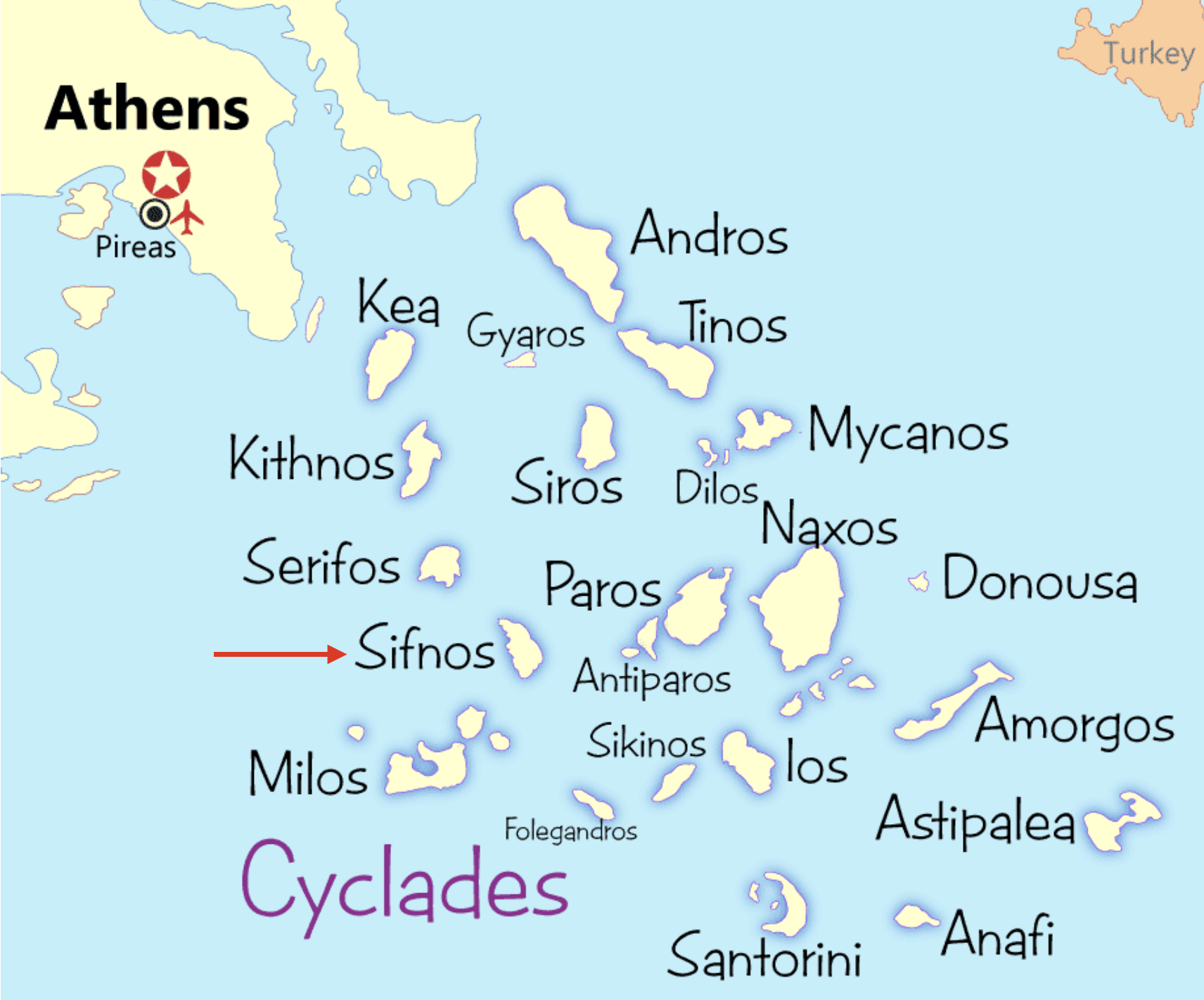
Right now, I’m in Sifnos, a small, sweet island not too far from Athens.
The view from where I’m staying, looking east.
So many cats here! This one almost got my fork.
Waiting outside my room for the sunrise this morning.
My two newest friends, so gentle and lovely, also just hanging out before sunrise.
Sunrise! If you look closely, you can see the outlines of Paros (in front) and Naxos.
This post contains specifics and logistics for our second exam in General Histology (DDS 6214).
Start and end time
The exam is scheduled for Tuesday, September 23, and you may take it any time between 12:01 am and 11:59 pm that day. Once you open the exam you have two hours to complete the exam. All submissions must be uploaded by 11:59 pm on Tuesday in order to receive a grade.
Accommodations
If you have accommodations for exams, please send me a quick email reminder (if you haven’t already) just to be sure I have everyone’s time accommodations correctly listed.
Password
The password for the exam is Bubbles2025.
Classroom availability
Our classroom will be open and available from 1:00 – 2:55 pm on Thursday, if you want to take the exam at that time in our classroom. I’d suggest that if there are several people in the the room, please try to space yourself out well so there’s no way anyone can suggest the possibility of you looking at someone else’s computer 🙂 You can, of course, take the exam anywhere you want – so take it wherever you’re most comfortable.
Content
I aim for a roughly proportional amount of questions based on the duration of each lecture (and, to some extent, the number of slides in each lecture). Here’s the full breakdown by lecture for this exam:
Some student questions on blood, the hematopoietic system, and the lymphoid system
Examplify Information
You will take this exam using Examplify installed on your PC/Macintosh laptop or desktop computer. If Examplify is currently installed, it may require an update and computer restart before the exam. If it is not installed, you should download and install the most up-to-date version of Examplify before the exam.
No scratch paper is allowed during the exam – but I have enabled the digital notepad feature within Examplify, so you can use that if that helps.
Also: this is not an open-book, open-note exam – and I trust that you will adhere to the honor code and not use any outside references.
Grading
After you take the exam, you will immediately receive your raw score. Final scores will be posted to your Canvas after I’ve reviewed the exam metrics.
Finally…
If you have any questions please feel free to email me any time.
As we went through each lecture, there were times when I said “this isn’t important for our exam purposes – but I included it in this lecture because _____” (usually, because it’s something I’ve heard has been on boards recently).
And I realize that is in a way okay, but also it takes some effort on your part to remember which things I said I wouldn’t test you on. And your time is short enough as it is.
So for each lecture, I’ve made a list of the things I said you did NOT have to learn for the exam. I’ve also thrown in a few things that you DO need to know, just to reiterate these important points.
Slide 10: DON’T memorize the numbers in bullet point two.
Slide 12: DON’T memorize the stage at which erythrocyte precursors stop undergoing mitosis, or the fact that the proerythroblast is my favorite cell. DO know the names of each of these maturational stages, though, and know what makes them unique. For example, hemoglobin formation begins in the polychromatic erythroblast (you can maybe remember that because “polychromatic” means “more than one color” – and that refers to the fact that now the cytoplasm has both blue (from RNA) and red (from hemoglobin) in it.
Slide 21: DON’T memorize the size or the number of copies of DNA in the megakaryocyte. DO know that megakaryocytes are gigantic, though, and that the reason they get that big is because they do this weird thing called endomitosis (they replicate their DNA but don’t undergo cell division).
Slide 25: DON’T memorize the time it takes for neutrophils to undergo maturation, or the exact length of time they stay in the blood.
Slide 26: Don’t memorize the stage at which neutrophil precursors stop undergoing mitosis. DO know the names of each maturational stage though, and know what makes them unique. For example, specific (pink) granules are first seen at the myelocyte stage.
Lymphoid System
Slide 31: If this slide bugs you, forget it! All the important facts that you need to know from it are included in later slides.
Endocrine System
Slides 14-16: There are a lot of explanatory words pointing out structures on the images in these slides. DON’T memorize all of them! DO know that the anterior lobe of the pituitary arises from the roof of the mouth, and that the posterior lobe of the pituitary arises from the developing neural tube.
Slides 20-21: DON’T memorize the names or locations of the subdivisions (e.g., pars distalis) of the anterior pituitary.
Slides 29-30: Same thing: DON’T memorize the names or or locations of the subdivisions (e.g., pars nervosa) of the posterior pituitary.
Slide 39: This is a crazy-busy picture, and the more I look at it, the more I regret leaving it in. The only thing this diagram illustrates well is the fact that the posterior pituitary does not make its own hormones; it secretes hormones that are made by the hypothalamus. But that point is already stated on slide 34 – so you can just cross out this diagram and not lose any important, testable information.
Slide 47: I won’t test you on anything in this slide. This is a great diagram, though, because it shows in a pretty clear way how thyroid follicular cells create thyroid hormone, secrete it into colloid, and then (when TSH binds to their little TSH receptors) take thyroid up, process it a bit, and dump it into the blood. But this level of detail is more for biochem than for our class – so you can ignore it for now. If you ever need a concise diagram of thyroid hormone production, though, this one might help 🙂
Slide 48: DON’T memorize all the things thyroid hormone does. DO know that it is important for growth (during childhood) and metabolism (it stimulates pretty much every organ system in the body).
Slide 77: DON’T memorize what delta and F cells produce. This is great boards fodder – but there’s enough for you to memorize for this exam, and you’ll cover this stuff in physiology anyway.
Cardiovascular System
Slide 32: DON’T memorize the stuff on this slide. I just put it here because the following slides talk about atria, ventricles, and the conducting system, and I wanted you to have an initial diagram to refer to if that was helpful.
Slide 50: DON’T memorize the fact that blood flows in a coordinated fashion by day 28 (the last bullet point and its sub-bullets). DO know the approximate day at which the first heartbeat occurs.
Tomorrow (Thursday, 9/18, starting at 1:00 pm) we have an Exam Review Kahoot scheduled.
I noticed that you have a Gross Anatomy exam on Friday, and sometimes that can mean that you’d rather have a little extra study time. If you would prefer, I can just post the Exam Review Kahoot online and you can work through it at your own speed, and let me know if you have any questions.
I’d like to do whatever you feel is best for you – so here is a quick, totally anonymous poll asking you whether you want to have class tomorrow in-person or not.
It will take less than a minute to answer – and it would be great to get answers from as many students as possible, because I want to make sure I’m doing the right thing for you!
Thanks for your time! I’ll let you know as soon as I get a majority response 🙂
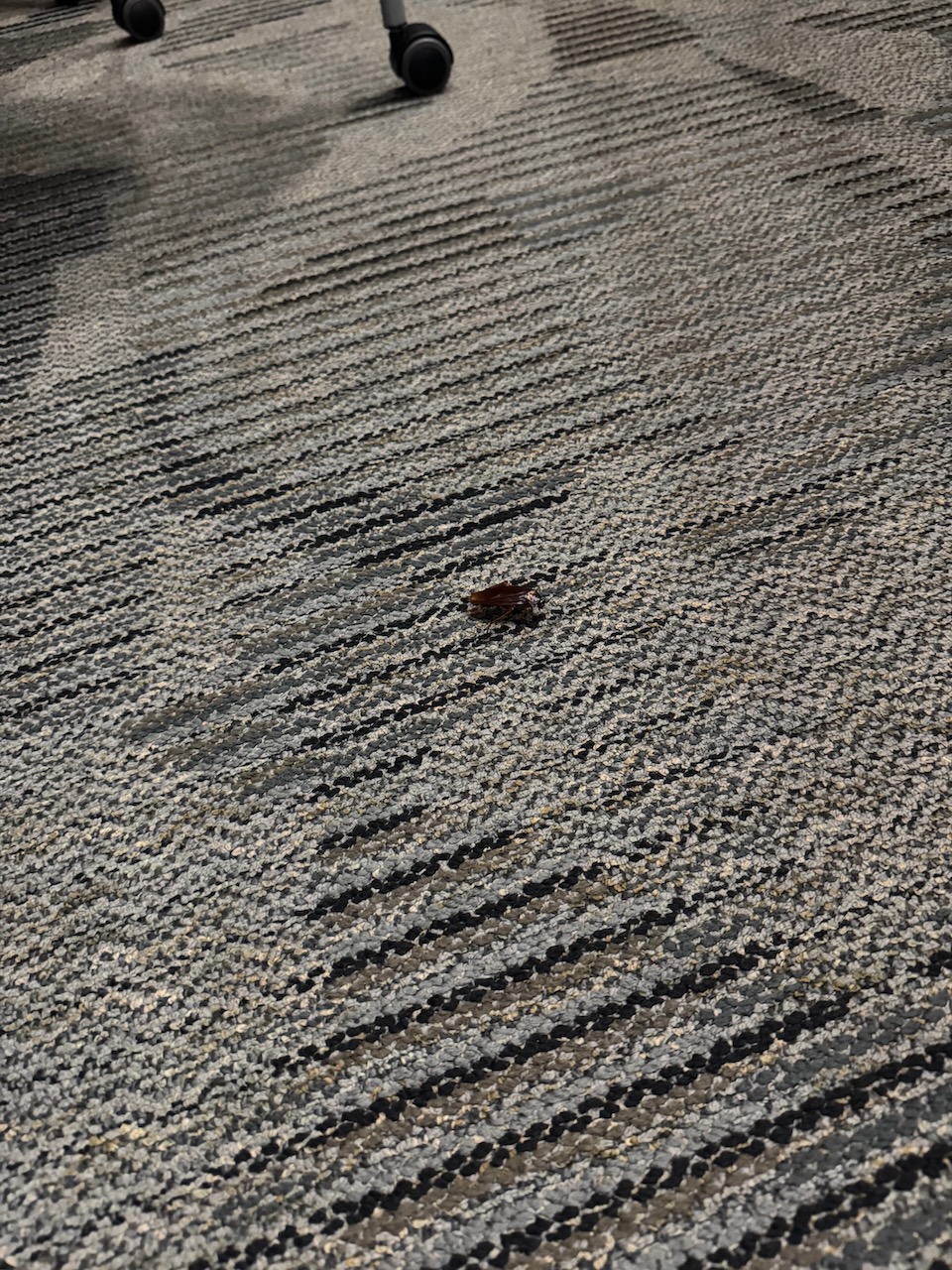
I don’t know why I told you guys about the roach that crawled up the whiteboard about 5 years ago.
I mean, I think of it from time to time, but – it’s just weird that half an hour later, this guy showed up:
I thought we should name him Gregor after the character Gregor Samsa in Kafka’s novel The Metamorphosis, who wakes up one day to find that he has changed into a giant insect:
And then this happened by the Adytum:
Oh well. I guess you just never know what’s gonna happen in that classroom.
Really great job, everyone! The mean score was 94%!
There was one question that only half of the class answered correctly. That piece of information, together with some other stats, told me that the question tested a concept that I did not clearly explain in class.
Here’s the question:
Q. Which of the following best describes the morphology of cardiac muscle cells? A. Spindle-shaped, unbranched, non-striated cells B. Long, unbranched cells with multiple peripheral nuclei C. Short, branched, striated cells D. Spindle-shaped, branched, striated cells E. Long, branched, striated cells
The correct answer is C.
So to compensate, I am adding one point to everyone’s score. That way, the people who answered incorrectly get that point back, and the people who answered correctly are not losing anything. The other way to do it is to just remove the question, but I like this way better.
I will redo the scores and then post everything on Canvas, most likely tomorrow.








 General Histology